_edited.png)
Edge banding importance in modular interiors in kerala

Modular interiors have transformed the way homes and offices look in Kerala. With a focus on clean lines, efficient use of space, and modern aesthetics, modular furniture is now a popular choice. One key detail that often goes unnoticed but plays a crucial role in the durability and appearance of modular interiors is edge banding. This simple finishing technique protects furniture edges, enhances visual appeal, and contributes to the overall quality of interior design.
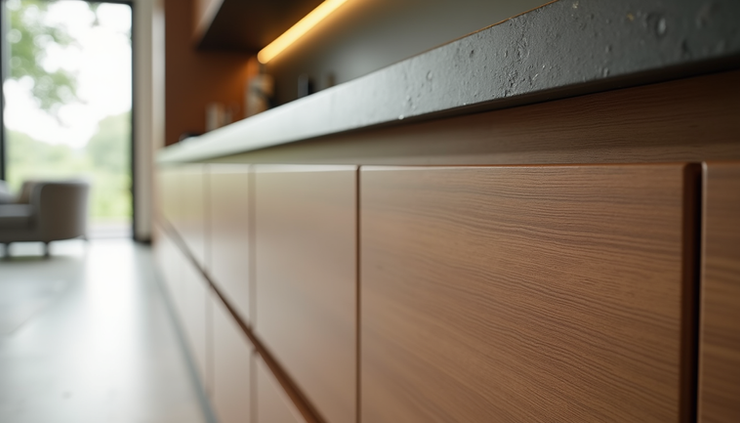
Close-up of edge banding on a modular kitchen cabinet in a Kerala home
What is edge banding and why it matters
Edge banding is a thin strip of material applied to the exposed edges of plywood, MDF, or particleboard used in modular furniture. These edges are vulnerable to moisture, chipping, and wear. In Kerala’s humid climate, untreated edges can absorb moisture, causing swelling and damage over time.
Applying edge banding:
Seals the raw edges from moisture and dust
Prevents chipping and peeling
Gives a smooth, finished look that matches the surface material
Improves hygiene by reducing dirt accumulation in gaps
Without edge banding, modular furniture quickly loses its charm and functionality. This is especially true in kitchens and bathrooms where moisture exposure is high.
Edge banding materials suited for Kerala interiors
Choosing the right edge banding material depends on the furniture type and location. Common materials include:
PVC: Durable, water-resistant, and available in many colors and finishes. Ideal for kitchen cabinets and wardrobes.
Acrylic: Offers a glossy finish and good resistance to moisture. Suitable for modern, high-gloss modular units.
Wood veneer: Provides a natural wood look but requires more maintenance. Best for living room furniture or areas with less moisture.
Melamine: Cost-effective and moisture resistant, often used in budget modular furniture.
In Kerala, PVC and acrylic edge banding are preferred for their ability to withstand humidity and frequent cleaning.
How edge banding enhances modular interior design
Edge banding is not just functional; it also adds to the design quality. Here’s how it improves modular interiors:
Seamless appearance: Properly applied edge banding creates a continuous look, making furniture appear custom-made.
Color and texture matching: Edge banding can match or complement the surface finish, enhancing the overall aesthetic.
Modern style: Sharp, clean edges with banding fit well with Kerala’s contemporary interior trends.
Customization: Different edge profiles and colors allow designers to create unique looks tailored to client preferences.
For example, a modular kitchen in Kochi with matte laminate cabinets and matching PVC edge banding looks sleek and easy to maintain, reflecting modern Kerala homes’ style.
Practical benefits for Kerala homes and offices
Kerala’s climate and lifestyle demand furniture that lasts and looks good with minimal upkeep. Edge banding supports this by:
Increasing furniture lifespan: Protects edges from moisture damage and mechanical wear.
Reducing maintenance: Smooth edges are easier to clean and less prone to dirt buildup.
Improving safety: Rounded or smooth edges reduce the risk of injury, important in homes with children.
Cost efficiency: Prevents early replacement or repairs, saving money in the long run.
In offices across Kerala, modular workstations with edge-banded panels maintain a professional look despite heavy daily use.

Modular wardrobe with edge banding in a Kerala bedroom
Choosing the right edge banding for your modular interiors
When planning modular interiors in Kerala, consider these tips for edge banding:
Match the edge banding material to the furniture’s surface and use area.
Opt for moisture-resistant materials in kitchens, bathrooms, and humid areas.
Check the quality of adhesive used to ensure long-lasting bonding.
Select edge profiles that suit the design style—rounded edges for safety, square edges for a modern look.
Work with experienced carpenters or interior designers familiar with Kerala’s climate challenges.
Final thoughts on edge banding in Kerala interiors
Edge banding plays a vital role in the success of modular interior designers in kottayam,Kerala. It protects furniture from the region’s humidity, enhances the look, and adds value by extending the life of cabinets, wardrobes, and other units. Homeowners and designers who pay attention to this detail enjoy interiors that stay beautiful and functional for years.
